Sherry Norfolk – Storytelling in Schools…

Press Play to hear Dr. Sherry Norfolk speak on why would should use storytelling in school settings on the Art of Storytelling with Brother Wolf.
 |
|
||||
Sherry Norfolk Writes…
Last year, I taught a 3rd grade storytelling and creative writing residency in St Louis. The kids I worked with were typical – meaning that every child was different from every other child. They each had unique interests, skills and abilities. They each had different life experiences and different needs. Typical class, right? So; what? Why am I telling you about these typical kids?
Because they WERE typical! Because in that class, there were some kids who HATED to write and some kids who NEVER paid attention in class and some kids who HATED to get up in front of people for any purpose whatsoever. And because they all wrote willingly – even enthusiastically. They all paid attention – to me and to each other. They all told their stories eagerly.
And that’s not so typical, is it?
No, I don’t hand out candy or quarters or wave a wand — but I do know some magic. I know how to create different points of entry to learning through storytelling. Different from what they’ve experienced before. Different from what they expect. Different ways to engage them and keep them engaged.
Some examples:
DeAndre didn’t want to write: but he was sitting there making up a rap verse that told his story – when I told him he could write his story in rap, he grabbed his pencil!
Tommy wouldn’t write a rough draft: but he was intrigued by the sounds and voices; when he learned that he was going to et to do them if he had a story, he wrote!
Lisa didn’t want to finish her story: but she loved the idea of acting out the story with a partner. She needed story in order to do it, so she wrote!
Myeisha hated the idea of doing a final copy: I provided pretty paper – she wrote; knowing we were publishing the appealed to some of the other kids.
Dierra and Terence had said that they didn’t want to tell: but they LOVED acting out animal characters, and wanted to share their new talents;
Henry was adamant that he wouldn’t tell – couldn’t remember the story – and it was boring. I told it TO him with lots of voices, etc., so that he could learn it visually, auditorally and kinesthetically and feel confident about his story.
Let me be clear — this isn’t about me. It’s about the power of Storytelling. It’s also about the power of meeting kids where they ARE and finding ways to take them where they need to be. It’s about different Points of Entry.
Each of those kids needed to be offered different Points of Entry to entice them to learn. It’s not a one-size-fits-all world, and no one teaching style or experience will be right for all kids. Storytelling allows you to engage All Ways of Knowing – the Whole Brain – what Howard Gardner calls the Multiple Intelligences.
You’re familiar with the concept of Multiple Intelligences, right? It’s the recognition that we can be intelligent in many ways, not just the words and numbers ways that are valued in school. Howard Gardner calls those
Linguistic Intelligence – word smart, and
Mathematical-Logical – number smart.
But he also identified
Kinesthetic Intelligence – body/movement smart
Musical Intelligence – rhythm and melody smart
Spatial Intelligence – picture smart (incl. 3-dimensional, directional)
Interpersonal Intelligence – smart about interactions between people
Intrapersonal Intelligence – smart about understanding yourself
Naturalist Intelligence – plant and animal smart
We all have some measure of each of these intelligences, but the proportions are different with each of us. As adults, you are allowed to make choices in how you participate in learning experiences. You find your comfort zone and inhabit it. But we don’t often allow children to choose what and how they want to learn. They don’t often have a chance to explore options and to determine what works best for them. They are rarely provided with the opportunity to view curriculum topics from different perspectives or points of entry.
Points of entry can also apply to learning styles – which are a bit different from intelligences. We are all born with a dominant learning style – either aural (we learn best by hearing), or visual (we learn by seeing), or kinesthetic (we learn by doing). Early on, a child is very heavily dominant in a particular learning style – he may be 85% aural or visual or kinesthetic.
He HAS to hear – or see – or DO to learn!
If he’s not allowed to learn in his dominant style, he’s not likely to learn at all! A child who is dominantly aural will totally tune out to visual stimuli, or even voices if they are droning and boring. A kinesthetic child who is made to sit still will become incredibly restless, distracted and distracting. A visual child who can’t see the picture-book or whose teacher doesn’t write the instructions on the board will not pay attention or follow instructions. These kids aren’t being deliberately bad – they absolutely can’t learn in the ways that they’re being offered!
So let’s return briefly to that typical classroom I told you about. Voices and sounds worked magic with the aural learner, and the pretty paper was a powerful motivation for the visual child. The kinesthetic kids were thrilled to get to act out characters and movement. The interpersonal children were happiest when sharing their stories with others. The linguistic kids wrote fluidly and used wonderful words, the mathematical-logical kids enjoyed creating logical cause-and-effect scenarios in their stories. The musical kid wrote his story as a rhythmic rap. Everybody had a chance to succeed. Everybody found their own points of entry into learning.
Storytelling provides those all-important points of entry. A few years ago, the evaluators for the Mississippi Arts Commission’s Whole Schools Initiative conducted educational research on integrating the arts [i.e., storytelling] into the curriculum. In the book The Arts Are an “R” Too, they tracked student and teacher performance and improvement as teachers used the arts to teach. They observed teachers creating situations in which academic content was taught and/or reinforced in and through the arts thus “inspiring” student learning. They wrote that what the art lessons add to the classroom is the opportunity for students to understand, remember, think, work together, become confident, and be motivated.
Arts integration enables students to be active, to experience things directly, and to express themselves in ways that best suit the students. In the process, of course, students have fun and enjoy themselves and are enthusiastic which, in turn, makes them eager for the next time they can engage in active, hands-on, and varied lessons. Ultimately, students will acquire knowledge about, appreciation of, and a talent for the cultural aspects of being a citizen in their community, state, and country. The evaluators concluded that the teacher’s artistic instructional repertoire enabled him/her to tap students’ varied strengths and provide multiple ways to acquire, process, and demonstrate what they learn. In other words — the arts provide multiple points of entry!
We each – as teachers, and teaching artists – have the opportunity to fuel the flame of learning. We hold keys that can unlock joy and curiosity and enthusiasm and eagerness to learn. We know ways to engage children in an avid quest for knowledge, and methods of teaching that address all ways of knowing and styles of learning.
But we sometimes let inner messages stop us: It’s easier to do it the old way. This is the way we’ve ALWAYS DONE IT! We KNOW that each child is different, and that each child has different ways of learning. We KNOW that there is no ONE way to teach. But we let the inner – and outer — messages control us. We teach the way the book says to do it, and if that fails to reach a child, we blame the child; or the book; or the system.
Let me share a poem with you;
The Cold Within
by James Patrick Kinney
Six humans trapped by happenstance
in black and bitter cold
Each possessed a stick of wood,
Or so the story’s told.
Their dying fire in need of logs,
the first woman held hers back
For of the faces around the fire
She noticed one was black.
The next man looking ‘cross the way
Saw one not of his church
And couldn’t bring himself to give
The fire his stick of birch.
The third one sat in tattered clothes
He gave his coat a hitch,
Why should his log be put to use
To warm the idle rich?
The rich man just sat back and thought
Of the wealth he had in store,
And how to keep what he had earned
From the lazy, shiftless poor.
The black man’s face bespoke revenge
As the fire passed from his sight,
For all he saw in his stick of wood
Was a chance to spite the white.
And the last man of this forlorn group
Did naught except for gain,
Giving only to those who gave
Was how he played the game.
The logs held tight in death’s stilled hands
Was proof of human sin,
They didn’t die from the cold without,
They died from the cold within.
Think about what can happen if those men around the fire put aside their inner messages — what can happen if they look at things from a DIFFERENT PERSPECTIVE. Imagine what will happen when we as teachers and storytellers share the fire!
Storytelling can ignite that fire — it can engage kids in learning – and when kids are engaged, discipline problems begin to disappear. Attendance becomes more regular. Teachers can teach because the kids are eager to learn! That’s how classrooms can be transformed – and when more and more classrooms experience the power of storytelling, more and more transformation takes place within a school. Learning can and will happen in a place like that!
Now let’s talk about the KIND of learning that’s happening when storytelling comes into the classroom.
Einstein once said, “I am enough of an artist to draw freely upon my imagination. Imagination is more important than knowledge. For knowledge is limited, whereas imagination embraces the entire world, stimulating progress, giving birth to evolution. ”
When storytelling enters the classroom, students aren’t just learning to regurgitate facts and figures – they’re learning to think imaginatively! In A Whole New Mind, Daniel Pink argues that never before has right-brain, creative thinking been more important than in today’s society. Due to the proliferation of technology, the changing workforce and shifts in the global marketplace, we must be teaching our children how to think conceptually and holistically – and how to think outside the box to solve challenging dilemmas. Learning through the arts is the most effective way to encourage and achieve that kind of thinking.
Storytelling provides an approach to education with the potential to transform whole schools by reinvigorating teaching in core subjects and inspiring students to greater joy and achievement in learning. Storytelling instruction has the power to shift thinking patterns and learning capacity for teachers and students alike. As Jane Stenson puts it in the Storytelling Classroom: Applications Across the Curriculum (Libraries Unlimited, 2006), “storytelling belongs in an on-going and fundamental way in education. It allows teachers to teach Language Arts, Social Studies, Math and Science standards in holistic and meaningful ways. It changes the way teachers manage children and the way everyone speaks to each other; it’s democratic; it’s fun; it’s whole; and it’s very, very humane.”
So put storytelling to work in the classroom to teach the standards, engage the students, and empower learning.
Resources on the Research
- Caine, Renate Nummela and Geoffrey. Making Connections: Teaching and the Human Brain. Addison-Wesley, 1994. pp. 100-101.
- Gardner, Howard. Multiple Intelligences: The Theory in Practice. Basic Books, 1993.
- Frames of Mind: Theory of Multiple Intelligence. Basic Books, 1993.
- Haven, Kendall. Story Proof: the Science Behind the Startling Power of Story. Libraries Unlimited, 2007.
- Jensen, Eric. Arts with the Brain in Mind. Association for Supervision and Curriculum Development, 2001.
- Education with the Brain in Mind. Association for Supervision and Curriculum Development, 2000.
- Brain-based Learning. Brain Store, Inc. 2000.
- “The Risk of Evolution: an Interview with Joseph Chilton Pearce.” Parabola, Summer 1992, pp. 54 – 60. Outlines the research on the brain’s response to television vs. storytelling.
- Schiller, Pam. Start Smart: Building Brain Power in the Early Years. Gryphon House, 1999.
- Sousa, David. How the Brain Learns. 2nd ed. Corwin Press, 2000.
- Williams, Linda Verlee. Teaching for the Two-Sided Mind: A Guide to Right Brain/Left Brain Education. Simon & Schuster, 1983.
- Wolfe, Patricia. Brain Matters: Translating Research into Classroom Practice. Association for Supervision and Curriculum Development, 2000.
li>Hannaford, Carla. Smart Moves: Why Learning is Not All in Your Head. Great Ocean Publishers, 1995.

Bio
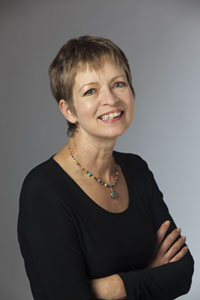
Sherry Norfolk is an internationally acclaimed storyteller, appearing at the International Storytelling Center, the Singapore Storytelling Festival, and many more festivals, schools, libraries and universities nationwide. Her strong, clear, direct stage presence immediately connects to audiences of all ages, and her use of tones, timbres, and rhythms in her telling breathes life into her rich repertoire of folktales from around the world. With a bachelor’s degree in Elementary Education and a master’s in Library Science, Sherry is the coauthor of nine books, including Literacy Development in the Storytelling Classroom (Libraries Unlimited, 2009) and The Storytelling Classroom: Applications Across the Curriculum (Libraries Unlimited, 2006). Sherry recently joined the faculty of Lesley University, teaching “Cultural Diversity through Storytelling” in their Creative Arts in Learning program.
You can learn more about Sherry Norfolk’s work at http://www.sherrynorfolk.com/
Tags: Arts in Schools, Language Literacy, Library Reading, Southern Storytelling, Teaching Children
 Creating Success, Episode List, International Storytelling, Literacy, Storytelling in Libraries, Storytelling in Schools | Brother Wolf |
  September 30, 2009 7:45 am
1 Comment
Other Links to this Post
RSS feed for comments on this post. TrackBack URI



By Jim Lehrman, March 3, 2016 @ 1:12 pm
I attended your workshop last Saturday in Raleigh, I thought it was great. It gave me a lot of ideas. Today, I introduced Norman Rockwell to my third grade ESL students. I asked them to react to a Rockwell painting they liked and tell me why. It generated a lot of good discussion. Tomorrow, I plan to show them The Girl with the Black Eye, and lead a seminar. Thanks